
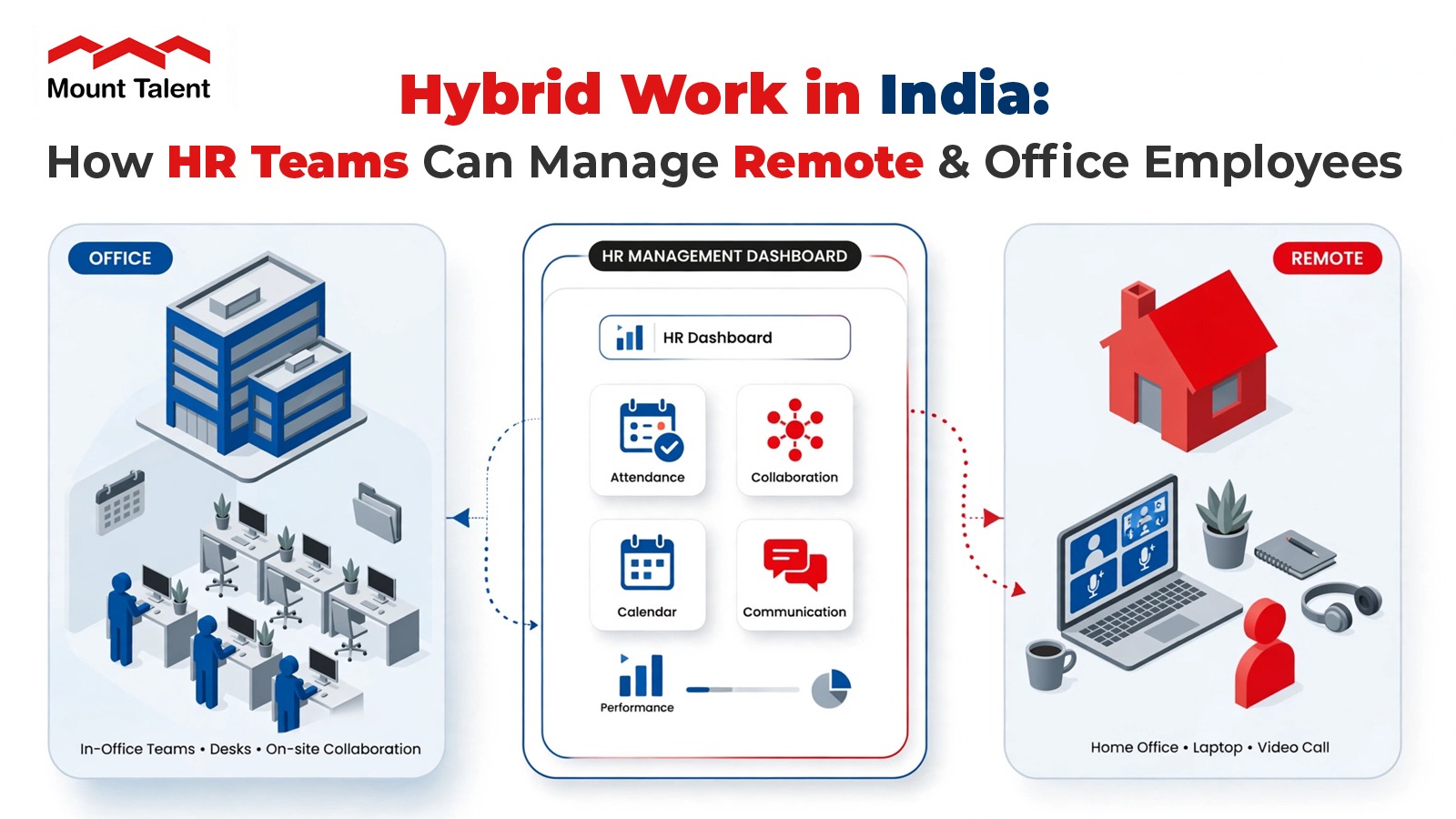
Hybrid Work in India: How HR Teams Can Manage Remote & Office Employees
Hybrid Work in India: How HR Teams Can Manage Remote & Office Employees
A few years ago, “work from home” was a rare favour. Today, many Indian employees expect at least some flexibility, and many companies have settled into a mix of home and office days. That sounds simple until HR has to run it.
Who comes to the office on which day? How do you judge the performance of someone you rarely see? How do you stop the people at home from feeling left out, or the people in the office from feeling overworked? These are the questions HR teams deal with every week.
In this guide, you will learn what hybrid work really means, the challenges Indian companies face, and practical steps HR teams can use to manage remote and office employees fairly and smoothly.
What Is Hybrid Work?
Hybrid work is a working model where employees split their time between the office and a remote location, usually their home. Some companies fix the days, such as three days in the office and two at home. Others let teams decide, or let employees choose based on the task.
Common hybrid work models in India
- Fixed schedule: Everyone follows set office days, for example Tuesday to Thursday.
- Flexible schedule: Employees choose their office days within a minimum limit, such as 8 days a month.
- Team-based schedule: Each team decides its own pattern depending on its work.
- Role-based schedule: Roles that need physical presence, like operations or lab work, stay on-site, while others work remotely part of the week.
There is no single best model. The right one depends on your industry, team size and the kind of work you do.
Why Hybrid Work Matters for Indian Companies
India has long commutes, heavy traffic and rising rents in cities like Mumbai, Bengaluru, Pune and Delhi NCR. Hours lost on the road are hours that employees could spend working, resting or with family. A hybrid model gives that time back.
For employers, it can also open up the hiring pool. A company in Gurugram can hire a skilled person living in Jaipur or Lucknow for a role that needs only occasional office visits. It can also reduce office space costs and improve retention, because many professionals now rank flexibility close to salary when choosing a job.
Biggest Challenges of Managing Hybrid Teams
Hybrid work is not easy for HR. Knowing the problems in advance helps you plan better.
Unequal treatment between remote and office staff
When managers see office employees every day, they may unconsciously favour them for promotions and projects. This is often called proximity bias, and it can quietly damage morale among remote workers.
Communication gaps
Important decisions get made in a hallway chat or over tea, and the person at home never hears about it. Small gaps like this build into big frustration.
Weak team bonding
New joiners especially struggle to build relationships when they only meet colleagues on a screen.
Data security and device management
Employees working from home use personal Wi-Fi networks and sometimes personal devices, which raises security risks.
Burnout and the “always on” feeling
When home becomes the office, many people find it hard to switch off. Without clear boundaries, work hours stretch longer than before.
How HR Teams Can Manage Hybrid Work Successfully
Here is a practical, step-by-step approach that HR teams can follow.
1. Create a clear hybrid work policy
Do not leave things vague. Put the rules in writing and share them with everyone. A good hybrid work policy should cover:
- Which roles are eligible for remote or hybrid work
- Minimum office days, if any
- Core working hours when everyone must be reachable
- Rules for internet, equipment and expense reimbursement
- Process for requesting changes to the schedule
- Data security and confidentiality guidelines
When the rules are clear, there are fewer arguments and fewer complaints about favouritism.
2. Set expectations around outcomes, not hours
Managing a hybrid team by watching who is online does not work and breeds distrust. Instead, define goals clearly. Tell each employee what is expected, by when, and how success will be measured. This approach treats people as adults and keeps the focus on results.
3. Make performance reviews fair for everyone
To reduce proximity bias, use the same criteria for remote and office employees. Ask managers to document achievements throughout the year instead of relying on memory. Include feedback from multiple people, and train managers to notice their own bias. A simple check is to compare promotion and rating data for remote versus office staff each cycle. If one group is consistently behind, something is wrong.
4. Improve communication habits
Good communication is the backbone of any remote and office employees setup. A few habits help a lot:
- Write things down. Share decisions in a team channel or email so no one misses them.
- Use the right tool for the job. Chat for quick questions, video calls for complex discussions, shared documents for ongoing work.
- Run structured meetings. Share an agenda in advance and circulate notes afterwards.
- Make hybrid meetings fair. If some people are in a room and others are on screen, ask everyone to join on their own device so remote staff are not treated as an afterthought.
5. Plan office days with purpose
If employees travel to the office only to sit on video calls all day, they will resent it. Use office days for things that truly benefit from being together, such as brainstorming, training, planning sessions, client meetings and team celebrations. Keep focused solo work for home days.
6. Build culture beyond the office walls
Culture does not appear by itself in a hybrid company. HR has to create it deliberately. Try virtual coffee chats, small team lunches on office days, recognition shouts in group channels and occasional offsites. During Indian festivals like Diwali, Holi or Eid, send small gifts to remote employees too, so they feel part of the celebration.
7. Strengthen onboarding for hybrid joiners
New joiners need extra care. Send their equipment before day one, assign a buddy, schedule intro calls with key colleagues and, if possible, plan their first week in the office. A strong start often decides whether someone stays for years.
8. Support wellbeing and prevent burnout
Encourage employees to take their leaves, avoid late-night messages unless urgent and respect weekends. Offer access to counselling or wellness programs. Managers should check in on how people are doing, not just on what they are delivering.
9. Invest in the right tools and security
Give employees reliable collaboration tools, project management software and secure access to company systems. Use basic security measures like VPN, multi-factor authentication and clear rules for personal devices. Train staff on spotting phishing emails, because remote setups are common targets.
How to Measure Whether Your Hybrid Model Is Working
Do not assume your policy works just because no one complains. Track a few simple indicators:
- Employee satisfaction and pulse survey results
- Attrition rates for remote versus office employees
- Productivity and project delivery timelines
- Office attendance patterns
- Promotion and rating gaps between groups
Review the data every quarter and be ready to adjust. Hybrid work is not a one-time setup, it keeps evolving with your team.
Common Mistakes HR Teams Should Avoid
- Copying another company’s policy. A model that suits a large IT firm may not fit your 60-person business.
- Forcing attendance without a reason. Mandatory office days with no clear purpose frustrate employees and push them to look elsewhere.
- Ignoring remote employees in decisions. Include them in meetings, projects and growth plans.
- Relying only on monitoring software. Tracking tools can erode trust. Focus on outcomes and communication.
- Skipping manager training. Managers are the ones who make hybrid work succeed or fail in daily practice.
Frequently Asked Questions
What is the hybrid work model in simple words?
The hybrid work model lets employees split their working week between the office and a remote location, usually their home, based on company policy and job needs.
How can HR manage remote and office employees fairly?
HR can manage both groups fairly by using the same performance criteria, setting clear outcome-based goals, sharing information openly and training managers to avoid proximity bias.
Is hybrid work suitable for all Indian companies?
No, hybrid work suits knowledge-based and office roles best. Jobs that need physical presence, like manufacturing or retail, may use limited flexibility such as shift choices instead.
Conclusion
Hybrid work is here to stay in India, and the companies that handle it well will attract and keep better talent. The key is clear rules, fair treatment, open communication and a culture that includes everyone, wherever they sit. If you are hiring for hybrid or remote roles, or looking for one yourself, explore current openings on Rojgar.com, and read more on managing modern workplaces at Harvard Business Review.
Ready to build a hybrid workplace that works? Review your current policy this week and fix the one gap that affects your team the most.
Hybrid Work in India: How HR Teams Can Manage Remote & Office Employees A few years ago, “work from home”…