
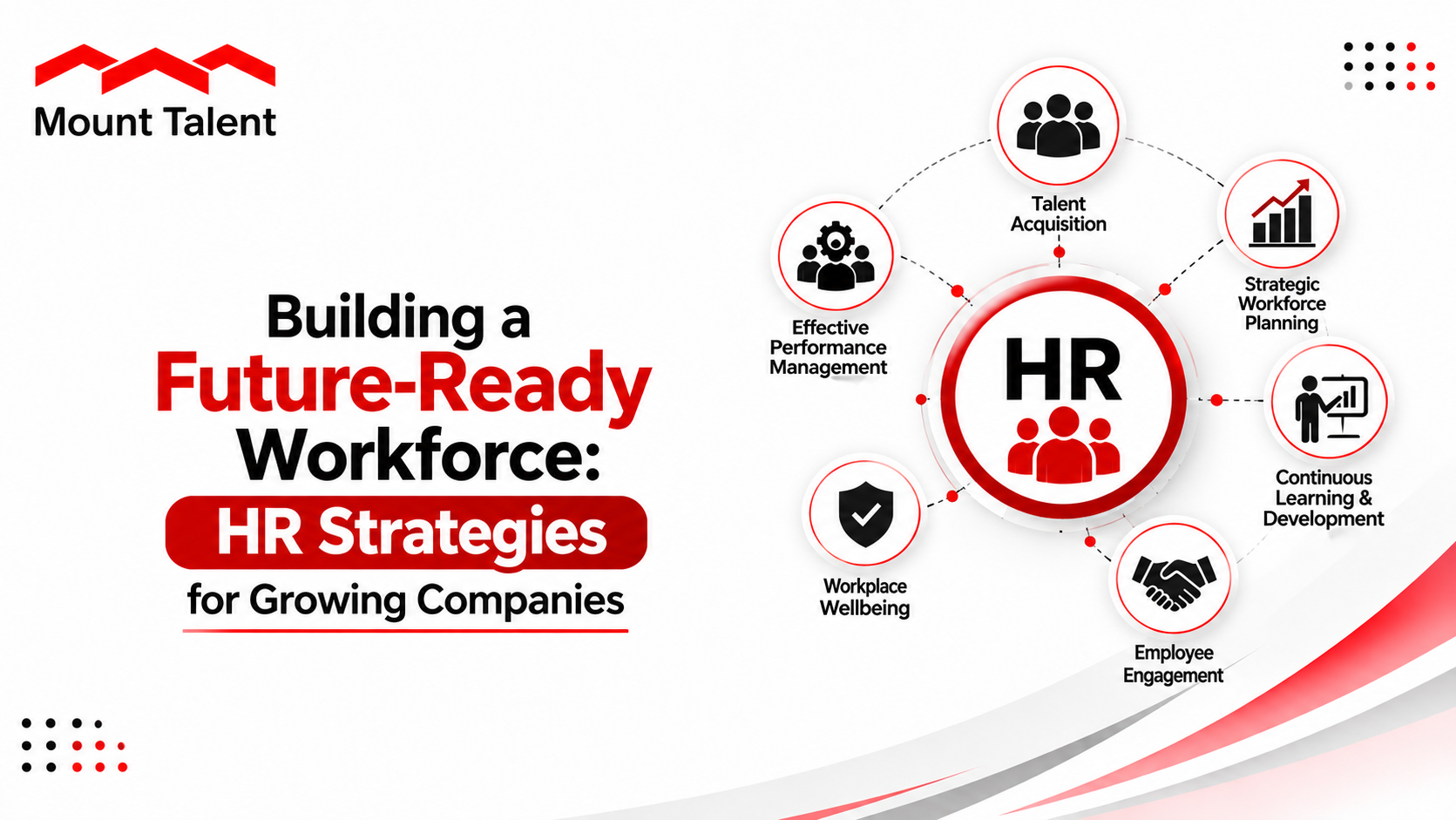
Building a Future-Ready Workforce: HR Strategies for Growing Companies
Building a Future-Ready Workforce: HR Strategies for Growing Companies
Picture a company that doubled its team in two years. Sales are up, new clients keep coming, and the office is buzzing. But behind the scenes, managers are overloaded, new joiners are confused, and a few key people have just resigned. Growth is exciting, yet it exposes every gap in how a company manages its people.
This is a common story in India’s fast-growing businesses. Technology is changing job roles, customer expectations keep shifting, and talent is hard to find and harder to keep. Companies that plan their people strategy early can handle this change. Those that don’t often struggle to keep up.
In this guide, you will learn what a future-ready workforce means, why it matters for growing companies, and seven practical HR strategies you can start using right away, even with a small team and a limited budget.
What Is a Future-Ready Workforce?
A future-ready workforce is a team that has the right skills, mindset and support to adapt to changes in technology, markets and business needs. These employees keep learning, work well with others and can take on new roles when the business demands it.
Future-ready does not mean “tech-heavy”
Many people assume this only applies to IT companies. In reality, a retail store, a manufacturing unit, a school or a logistics firm all need teams that can adapt. A shop manager who learns digital inventory tools or a supervisor who understands basic data reports is just as future-ready as a software developer.
Why Growing Companies Need a Future-Ready Workforce
Growth brings new challenges. More customers, more locations and more complex operations all need people who can keep pace.
It protects you from skill gaps
Technology like AI and automation is changing job roles quickly. Without planning, you may suddenly find that your team lacks the skills your business needs next year.
It reduces hiring pressure
If you build skills inside your company, you rely less on expensive, last-minute hiring. Promoting and training from within is often faster and cheaper.
It improves retention
Employees stay longer when they see learning and growth. A strong people strategy is one of the best defences against attrition in India’s competitive job market.
It makes growth smoother
Teams that are trained, supported and clear about their roles handle expansion with fewer mistakes and less stress.
7 HR Strategies to Build a Future-Ready Workforce
1. Plan your workforce around business goals
Start by looking at where your business is heading in the next two or three years. Will you open new branches, launch new products or enter new markets? Then ask: what roles and skills will we need?
Simple workforce planning steps
- List your current roles and the skills your team already has
- Note the skills you will need in the next 12 to 36 months
- Identify the gaps and decide whether to train, hire or use contract staff
- Review the plan every quarter as the business changes
Even a basic spreadsheet is enough to begin.
2. Hire for potential and skills, not just degrees
Many growing companies look only at qualifications and years of experience. But a person’s ability to learn, solve problems and adapt often matters more.
Consider using practical tasks, short assessments or portfolio reviews during hiring. This helps you find capable people from smaller towns and non-traditional backgrounds who may be overlooked in a degree-first approach. Internships and trainee programs are also a good way to build a pipeline of fresh talent.
3. Make continuous learning part of daily work
Training should not be a once-a-year event. Build a culture where learning is normal.
- Set aside regular learning time, such as a few hours every week
- Offer online courses and certifications linked to real job needs
- Use free platforms like Swayam, NPTEL and the Skill India Digital Hub for low-cost options
- Encourage employees to share what they learn with the team
- Use job rotation so people gain experience across functions
Upskilling improves performance today, and reskilling prepares people for new roles tomorrow.
4. Develop strong managers and future leaders
Managers shape most of an employee’s daily experience. In growing companies, many managers are promoted because they were good at technical work, not because they know how to lead people.
Train them in communication, feedback, delegation and handling conflict. Create a simple leadership pipeline by identifying high-potential employees early and giving them mentoring, stretch projects and chances to lead small teams.
5. Build a flexible and inclusive workplace
Today’s employees, especially younger ones, value flexibility and fairness. Where the job allows, offer hybrid options, flexible timings or shift choices. Ensure that hiring, pay and promotions are fair for people of all genders, regions and backgrounds.
An inclusive culture brings in more ideas, widens your talent pool and builds trust. A clear anti-harassment policy and a safe way to raise concerns are basic but important steps.
6. Use technology and data wisely
You don’t need heavy systems on day one, but the right tools save time and give clarity.
- HR software can automate payroll, attendance, leave and onboarding
- Learning platforms make training easy to deliver across locations
- Simple HR analytics can track attrition, hiring time and engagement so decisions are based on facts
Always choose tools that fit your company size and are easy for employees to use. Technology should support people, not replace the human side of HR.
7. Focus on employee experience and retention
A future-ready workforce is one that wants to stay. Pay attention to the whole employee journey.
- Strong onboarding: Prepare equipment, assign a buddy and share a clear 30-60-90 day plan
- Regular feedback: Short, honest check-ins work better than a single yearly review
- Recognition: Thank people quickly and genuinely for good work
- Wellbeing support: Respect working hours, encourage leave and offer access to counselling where possible
- Fair pay and growth paths: Review salaries regularly and show clear next steps in every role
Stay interviews, where you ask current employees what keeps them and what might make them leave, can reveal problems before resignations arrive.
A Simple Example
Imagine a growing logistics company with 150 employees planning to expand to three new cities. HR studies the plan and finds that it will need more supervisors, route planners and customer support staff within a year.
Instead of hiring everyone from outside, the company identifies ten high-performing drivers and warehouse staff, trains them in supervision and basic digital tools, and promotes them gradually. It hires externally only for the remaining roles. The result is faster expansion, lower hiring cost and higher loyalty, because employees see a clear path ahead.
How to Get Started: A Practical Roadmap
Step 1: Assess where you are
Review your current skills, attrition, hiring speed and employee feedback. Honest data shows where to begin.
Step 2: Pick two or three priorities
Don’t try to fix everything at once. If attrition is high, start with retention and managers. If skills are lacking, begin with training.
Step 3: Assign ownership
Give someone clear responsibility for each priority, along with a timeline and a simple measure of success.
Step 4: Start small and test
Run a pilot, such as a training program for one team, and learn from the results before expanding.
Step 5: Measure and adjust
Track progress every quarter using a few key numbers like retention rate, time to hire, training completion and employee satisfaction.
Common Mistakes Growing Companies Make
- Hiring fast without a plan. Quick hiring creates confusion and cultural mismatch.
- Ignoring HR until problems appear. Building basic HR processes early is far cheaper than fixing a crisis later.
- Training without purpose. Random courses waste money. Link learning to business needs.
- Overlooking frontline employees. Factory, retail and field teams deserve development too.
- Copying large companies. Choose strategies that fit your size, budget and culture.
- Neglecting communication. Employees should know the company’s direction and how they fit into it.
Frequently Asked Questions
What is a future-ready workforce?
A future-ready workforce is a team with the skills, adaptability and support needed to handle changes in technology, markets and business needs.
How can growing companies build a future-ready workforce on a small budget?
Growing companies can start with free learning platforms, internal mentoring, skills-based hiring, regular feedback and simple workforce planning, which cost little but deliver strong results.
Why is upskilling important for business growth?
Upskilling improves productivity, fills skill gaps, increases retention and helps a company adapt faster, which supports steady and sustainable growth.
Conclusion
Building a future-ready workforce is not a one-time project. It is a habit of planning ahead, investing in people and staying flexible as the business grows. Start with one or two strategies, measure the results and keep improving. If you are hiring or looking for your next opportunity, explore current openings on Rojgar.com, and read more on the future of jobs and skills at the World Economic Forum.
Building a Future-Ready Workforce: HR Strategies for Growing Companies Picture a company that doubled its team in two years. Sales…