
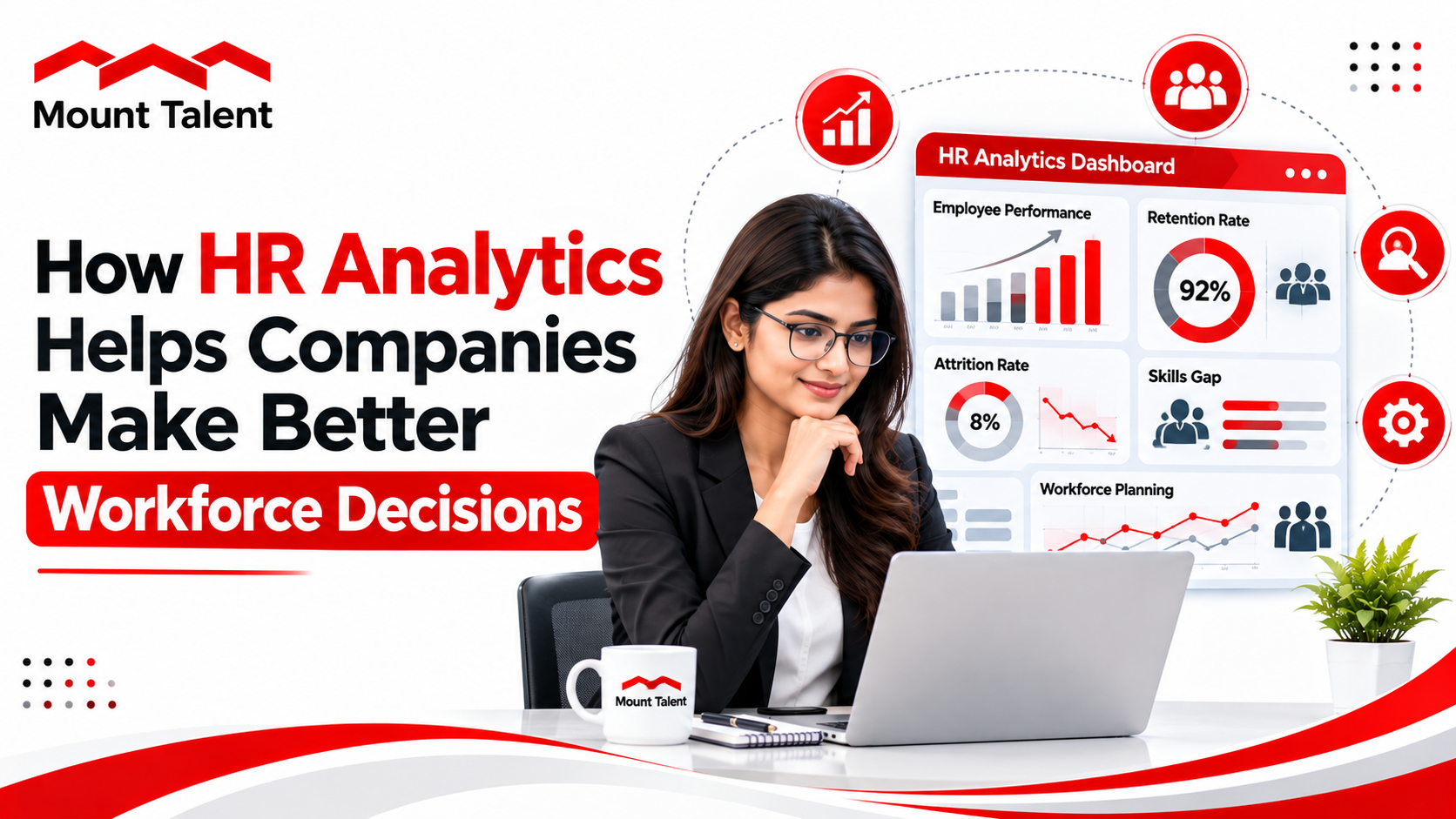
How HR Analytics Helps Companies Make Better Workforce Decisions
How HR Analytics Helps Companies Make Better Workforce Decisions
A manager says, “I feel like our attrition is going up.” Another says, “I think the sales team is overworked.” A third says, “Hiring through referrals seems to work better.” These are all guesses, and for years, many workforce decisions in Indian companies have been made this way, on gut feeling and past habit.
The problem is that guesses can be expensive. Hiring the wrong person, missing early signs of burnout or losing a strong performer you never saw coming can cost months of money and effort. This is where HR analytics comes in. It replaces hunches with facts.
In this guide, you will learn what HR analytics means, which metrics matter most, how it supports better workforce decisions, and how even a small Indian company can get started without a big budget.
What Is HR Analytics?
HR analytics is the practice of collecting and studying people-related data, such as hiring, attendance, performance and attrition, to make better decisions about the workforce. It is also called people analytics, workforce analytics or talent analytics.
HR analytics vs HR reporting
Reporting tells you what happened: “20 people left last quarter.” Analytics goes further and asks why: “Most of them were in their first year, reported to the same manager and had no salary revision.” That deeper insight is what helps you act.
Why HR Analytics Matters for Indian Companies
India’s job market moves fast. Skilled people get multiple offers, teams are spread across cities, and hybrid work has changed how we see productivity. In this setting, relying on instinct alone is risky.
Key benefits of data-driven HR
- Smarter hiring. You learn which sources bring the best candidates and which roles take too long to fill.
- Lower attrition. You spot patterns before good employees resign.
- Better planning. You can predict how many people you will need next year and in which skills.
- Fairer decisions. Data can highlight pay gaps and bias in promotions or ratings.
- Stronger business case. Numbers help HR earn a seat at the leadership table, since leaders trust evidence.
- Cost control. You see where money is being wasted, such as costly hiring or avoidable overtime.
Key HR Metrics Every Company Should Track
You do not need dozens of numbers. Start with the ones that matter most.
Attrition and retention rate
This shows how many employees leave over a period. Break it down by department, manager, tenure and age group, because the overall figure can hide the real problem.
Time to hire and cost per hire
Time to hire measures how long it takes to fill a role. Cost per hire includes job ads, agency fees and interview time. If these keep rising, your hiring process needs attention.
Quality of hire
This asks whether new employees perform well and stay. It can be measured using early performance ratings and one-year retention.
Absenteeism rate
A sudden rise in unplanned leaves can signal stress, low morale or poor management.
Employee engagement and satisfaction scores
Short surveys and employee Net Promoter Score (eNPS) reveal how people feel about working with you.
Training effectiveness
Track whether trained employees improve in performance, quality or productivity. This tells you which programs are worth repeating.
Pay equity and promotion rates
Compare pay and promotion data across gender, location and teams to find unfair gaps.
How HR Analytics Improves Workforce Decisions
Here is where data turns into action.
Better hiring decisions
Suppose your data shows that employee referrals bring candidates who stay twice as long as those from job boards. You can invest more in a referral program. Or if one role takes 90 days to fill, you may need to revisit the job description or salary range.
Reducing attrition before it happens
Analytics can reveal warning signs, such as employees with no promotion in three years, long commutes or repeated overtime. HR can then step in with a conversation, a role change or a pay review before a resignation lands.
Improving employee engagement
When survey data shows that a particular team scores low on manager support, you know exactly where to focus training or coaching, instead of launching company-wide programs that miss the point.
Smarter workforce planning
If your business plans to open a new branch or launch a new product, analytics helps you estimate how many people and what skills you will need, so you hire early rather than in panic.
Identifying skill gaps
By comparing current skills with future needs, you can plan upskilling and reskilling more precisely. This avoids spending on training no one needs.
Fairer pay and promotions
Data can highlight when two people in similar roles are paid very differently without a clear reason. Fixing these gaps builds trust and reduces legal and reputation risks.
Supporting hybrid and remote work
Analytics on productivity, project delivery and satisfaction helps you check whether your hybrid model is working and whether remote employees are being treated equally.
A Simple Example
Imagine a mid-sized retail company with 300 employees across several cities. HR notices that attrition among store staff is high. After reviewing the data, they find that most resignations happen within six months and mostly in stores with a particular shift pattern and long working hours.
Instead of raising salaries across the board, the company adjusts the shift schedule in those stores and improves onboarding in the first 90 days. Within a few months, early exits drop noticeably. The decision was cheaper and more targeted because the data pointed to the real cause.
How to Get Started with HR Analytics
You don’t need a data science team. Start small.
Step 1: Decide what question you want to answer
Do not collect data for the sake of it. Begin with a business problem, such as “Why are we losing people in the first year?”
Step 2: Gather and clean your data
Pull information from payroll, attendance, recruitment and performance records. Make sure it is accurate and consistent, because poor data gives poor answers.
Step 3: Choose simple tools
Many companies begin with Excel or Google Sheets. As needs grow, HRMS software with built-in dashboards or tools like Power BI and Tableau can help.
Step 4: Analyse and look for patterns
Compare groups, track trends over time and look for connections. Talk to managers and employees to understand the story behind the numbers.
Step 5: Act and measure
Turn insights into specific actions, then track whether things improve. Analytics only matters when it changes decisions.
Step 6: Build data skills in the HR team
Train HR staff in basic data handling, Excel and dashboard reading. Confidence with numbers grows with practice.
Common Mistakes to Avoid
- Collecting too much data. More numbers do not mean more insight. Focus on what answers your questions.
- Ignoring data quality. Incomplete or outdated records lead to wrong conclusions.
- Forgetting the human side. Data shows patterns, not feelings. Combine numbers with conversations.
- Misusing employee data. Handle personal data carefully, follow privacy rules and be transparent about what you collect and why.
- Treating analytics as a one-time project. It works best as a regular habit, reviewed monthly or quarterly.
- Using data to blame people. The goal is to improve systems and decisions, not to punish individuals.
Frequently Asked Questions
What is HR analytics in simple words?
HR analytics is the use of employee-related data to understand patterns and make better decisions about hiring, retention, performance and workforce planning.
What are the most important HR metrics to track?
The most important HR metrics are attrition rate, time to hire, cost per hire, quality of hire, absenteeism, employee engagement and training effectiveness.
Can small companies in India use HR analytics?
Yes, small companies can start with simple tools like Excel and a few key metrics, such as attrition and time to hire, and grow from there.
Conclusion
HR analytics gives companies a clearer picture of their people, so decisions are based on facts and not guesses. Start with one question, track a few useful metrics and act on what you learn. Over time, this habit leads to better hiring, stronger retention and a healthier workplace. If you are hiring HR or analytics professionals, or searching for your next role, explore current openings on Rojgar.com, and read more on people analytics trends at McKinsey.
How HR Analytics Helps Companies Make Better Workforce Decisions A manager says, “I feel like our attrition is going up.”…