
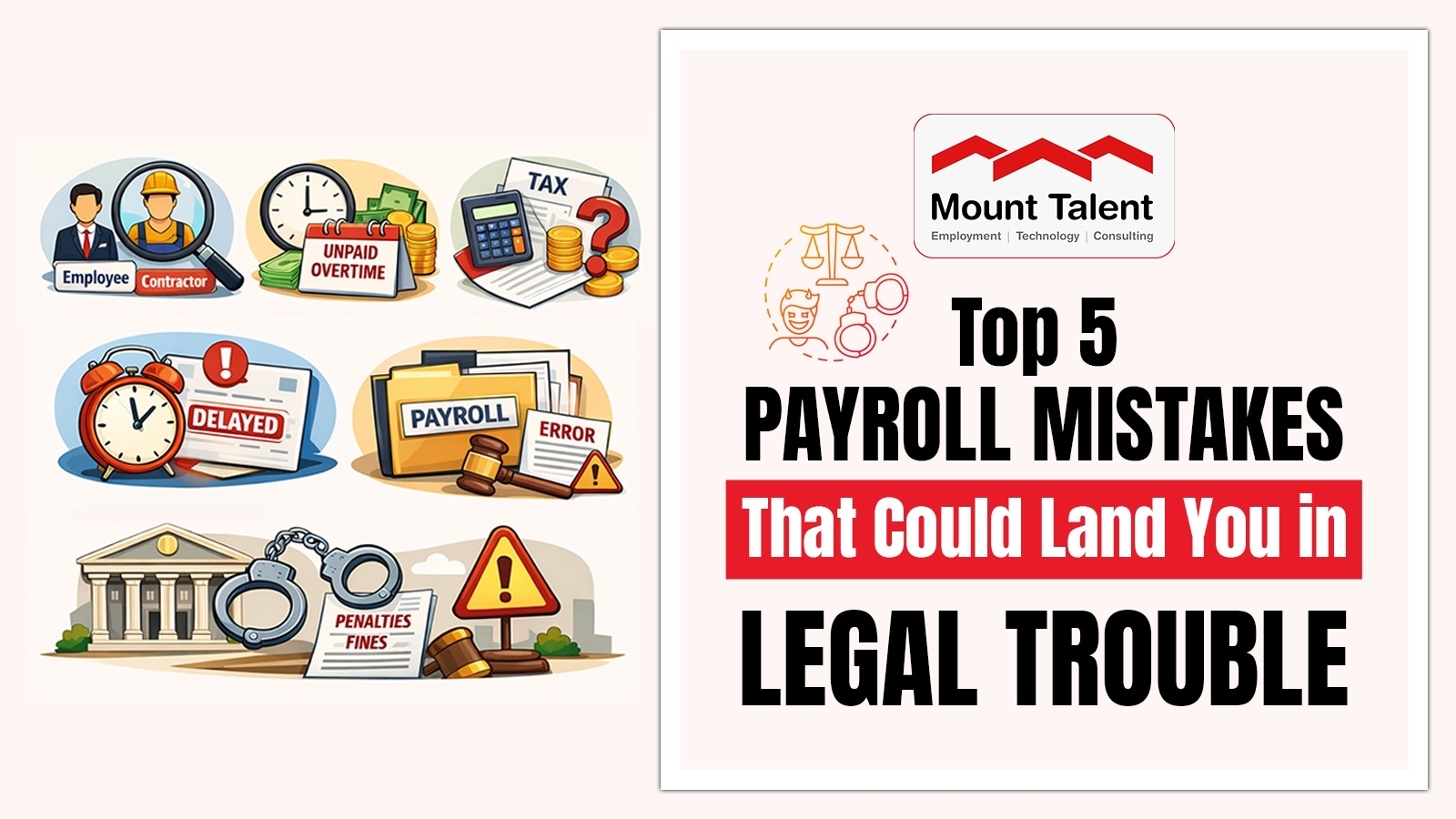
Top 5 Payroll Mistakes That Could Land You in Legal Trouble
People frequently think of payroll as a simple back-office task, but it really is at the crossroads of finance, HR, and compliance. Even tiny payroll mistakes can swiftly lead to legal penalties, employee complaints, and damage to a company’s reputation in India. Payroll mistakes are one of the most prevalent and expensive compliance hazards, affecting both new businesses that are growing quickly and older businesses that have a lot of employees.
In this article, we talk about the five most common payroll mistakes that could get your business in trouble with the law in India. We also explain why these mistakes are important and provide you tips on how to avoid them.
1. Putting employees in the wrong category
One of the most common payroll blunders in India is putting people in the wrong category, like consultants, freelancers, or contract workers.
Why this is dangerous
In India, the way employees are classified influences whether they can get perks like:
Employees’ State Insurance (ESI) and Provident Fund (PF)
Leave, bonuses, and gratuities
Misclassifying something, whether on purpose or not, can lead to not paying taxes. Officials may see this as an attempt to avoid following the rules.
Example from the real world
Several Indian IT and gig-based enterprises have come under fire for hiring long-term workers as “consultants” and then acting like employers by controlling their hours and deliverables.
How to stay away from it
In contracts, make sure roles and duties are clear.
Regularly review the terms of your agreement, especially if you are a long-term consultant.
Make sure that HR policies and payroll structures are in sync.
Companies typically use expert payroll advising services, like the ones Mount Talent Consulting offers, to make sure that everyone is classified correctly from the start.
2. Mistakes in Contributions and Statutory Deductions
One of the most common problems with payroll compliance is making mistakes while figuring out or depositing required deductions.
Common trouble spots
Mistakes in calculating PF wages
Deposits for PF or ESI that are late
Incorrect tax brackets for professionals
Mistakes in TDS on paychecks
Legal consequences
Not following the rules for statutory deductions can lead to:
Fees and interest
Prosecution in serious cases
Notices from the EPFO, ESIC, or the Income Tax Department
Useful information
During audits, even a small mistake in a calculation that happens over a few months can lead to big debts.
Best way to do things
Make payroll computations automatic
Update the legal rates
Check for compliance every month
A systematic payroll compliance framework makes you much less likely to get into legal trouble.
3. Paying salaries late or incorrectly
The Payment of Wages Act, 1936 says that paying employees on time and correctly is not only a best practice for HR, but also a legal necessity.
What firms do wrong
Paychecks were late because of cash flow problems.
Wrong pay stubs
Not getting overtime or bonus money
Why it matters
Workers can file formal complaints with labor authorities if they don’t get paid on time or if their wage is too low. In other states, each affected employee gets a fine.
Case insight
When payroll isn’t right, manufacturing and retail companies employing shift workers typically have arguments about overtime and night shift pay.
Plan for prevention
Set up clear payroll calendars
Check attendance and leave data against each other
Keep payslip formats clear
Processing payroll correctly also makes employees more likely to stay with the company.
4. Not following state-specific labor laws
India’s labor compliance landscape is complicated because each state has its own policies around minimum wages, labor welfare funds, and professional tax.
Common mistakes
Many businesses use the same payroll structure on all of their sites, even if the rules are different in each state.
There are legal risks, such as
Not paying the minimum wage
Wrong donations to the labor welfare fund
Not paying professional taxes
For example
If a business works in both Maharashtra and Karnataka and uses the same professional tax slab in both states, it could face fines.
How to handle this
Keep checklists for compliance by state
Make changes to payroll systems for businesses that operate in more than one state.
Get help from an expert with payroll rules that depend on where you are.
This is where full-service payroll management services really shine.
5. Bad record-keeping and paperwork for payroll
Paying employees is just one part of payroll compliance. Keeping records and writing things down are both very important.
What employers typically overlook
Payroll registers that aren’t complete
Not having records of attendance and leave
No audit trails for changes to salaries
What the law says
If you can’t show records during an inspection or a disagreement, you may still face fines even if you made the right payments.
Best way to do things
Keep digital records of payroll
Keep papers for the duration required by law
Do regular audits of your own payroll
Strong documentation protects businesses during inspections of their workers and claims made by employees.
Why Payroll Compliance Need to Be a Strategic Focus
Mistakes in payroll don’t happen very often. They typically point to bigger problems, such systems that are out of date, a lack of knowledge, or bad communication between the HR and finance teams.
Companies can do the following by putting money into structured payroll processes and compliance reviews:
Lower your legal risk
Make employees happier
Make governance and trust stronger
A lot of Indian businesses work with expert consulting services like Mount Talent Consulting to make payroll easier while still following changing labor standards.
Questions and Answers (FAQs)
1. What are the most common mistakes people make when it comes to payroll compliance in India?
Some of the most typical problems are wrong computations of PF and ESI, misclassifying employees, paying salaries late, and not following state-specific labor rules.
2. Can employers be sued if they make mistakes with payroll?
Yes. If you don’t follow the rules of payroll, you could face fines, interest, audits, and even jail time under Indian labor and tax laws.
3. What can businesses do to lower the legal risks that come with payroll?
Businesses can lower their risks by automating payroll, doing frequent compliance audits, keeping good records, and getting help from payroll experts.
Last Thought
Payroll isn’t only about paying people; it’s also about following the rules, building trust, and managing risk. Taking care of these frequent payroll blunders ahead of time can help businesses avoid expensive legal problems and keep their operations stable in the long run.
People frequently think of payroll as a simple back-office task, but it really is at the crossroads of finance, HR,…