
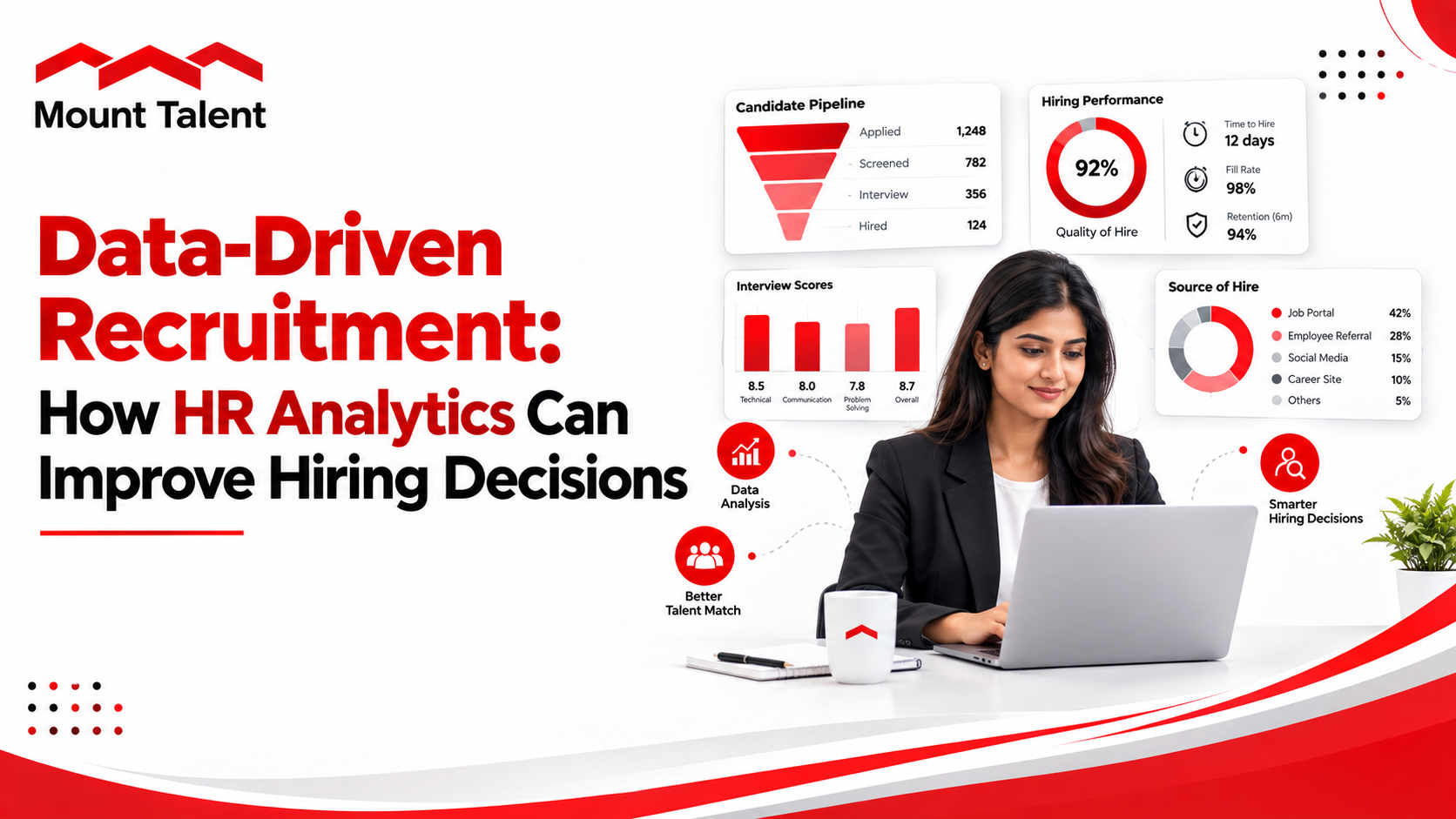
How HR Analytics Can Improve Hiring Decisions
Data-Driven Recruitment: How HR Analytics Can Improve Hiring Decisions
For years, hiring decisions in India were largely shaped by gut feeling. A recruiter liked a candidate’s confidence in the interview, a hiring manager trusted their instinct about “cultural fit,” and offers went out based on impressions rather than evidence. The problem is that instinct alone doesn’t scale, and it often leads to costly mismatches that only become clear months later.
Data-driven recruitment changes this by bringing measurable evidence into every stage of hiring. In this guide, you’ll learn what data-driven recruitment actually means, how HR analytics improves the quality of hiring decisions, and practical steps your company can take to start using data effectively, even without a large HR technology budget.
What Is Data-Driven Recruitment?
Data-driven recruitment is the practice of using measurable information, rather than assumptions, to guide hiring decisions at every stage, from sourcing candidates to predicting long-term performance.
Moving Beyond Gut-Feeling Hiring
Traditional hiring relies heavily on subjective impressions formed during interviews. Data-driven recruitment doesn’t remove human judgment entirely, but it supports that judgment with evidence, such as historical performance patterns, assessment scores, and funnel metrics that reveal what actually predicts success in a role.
Core Components of HR Analytics in Hiring
- Descriptive analytics: Understanding what has happened, such as time-to-hire or source of hire
- Diagnostic analytics: Understanding why something happened, such as why a particular channel produces weaker candidates
- Predictive analytics: Forecasting future outcomes, such as which candidate profiles are likely to succeed and stay long-term
Key HR Metrics That Improve Hiring Decisions
Before analytics can improve decisions, companies need to track the right metrics consistently.
Time-to-Fill and Time-to-Hire
Time-to-fill measures how long a role stays open from posting to offer acceptance, while time-to-hire tracks the candidate’s journey from application to offer. Monitoring these numbers helps identify exactly where delays occur in your hiring funnel.
Source of Hire Quality
Not all recruitment channels perform equally. Tracking which sources — referrals, job boards, LinkedIn, or campus drives — produce candidates who perform well and stay longest helps direct future recruitment budget toward what actually works.
Quality of Hire
This metric connects hiring decisions to real outcomes, typically measured through performance reviews, manager satisfaction, and retention at key milestones like ninety days and one year. It answers the most important question: did the hiring decision actually pay off?
Offer Acceptance Rate
A declining offer acceptance rate often signals problems with compensation competitiveness, slow decision timelines, or poor candidate experience, all of which data can help pinpoint precisely rather than through guesswork.
How HR Analytics Reduces Hiring Bias
One of the most valuable benefits of data-driven recruitment is its ability to surface and reduce unconscious bias that often creeps into subjective hiring decisions.
Identifying Patterns Human Recruiters Miss
Analytics can reveal patterns such as certain demographic groups being consistently screened out at particular funnel stages, even when no one intended this outcome. Spotting these patterns is the first step toward correcting them.
Standardizing Evaluation Criteria
Data-driven recruitment encourages structured interviews and standardized scoring rubrics, which reduce the influence of personal impressions and make comparisons between candidates more consistent and fair.
Auditing AI and Automated Tools
Companies using AI-powered screening tools should regularly review the data these tools produce to confirm they aren’t inadvertently favoring or filtering out specific candidate groups based on flawed historical training data.
Using Predictive Analytics to Forecast Hiring Success
Predictive analytics takes data-driven recruitment a step further by helping companies anticipate outcomes before they happen.
Predicting Candidate Success
By analyzing historical data on past hires, including assessment scores, interview ratings, and eventual performance, companies can identify which factors most strongly correlate with long-term success in specific roles.
Forecasting Future Hiring Needs
Predictive models can also help HR teams anticipate upcoming hiring demand based on business growth patterns, seasonal trends, or historical attrition rates, allowing recruitment planning to become proactive rather than reactive.
Reducing Early Attrition
Data can highlight specific onboarding or role-fit factors that correlate with employees leaving within their first few months, giving HR teams the insight needed to adjust hiring criteria or onboarding processes before losing more talent.
Implementing Data-Driven Recruitment in Your Organization
Adopting a data-driven approach doesn’t require an enormous technology investment to start delivering value.
Start With Clean, Consistent Data Collection
Ensure your applicant tracking system captures consistent information across every hire, including source, assessment scores, interview feedback, and eventual performance outcomes. Inconsistent data collection undermines any analytics effort from the start.
Choose the Right Tools for Your Scale
Smaller companies can begin with straightforward spreadsheet tracking and simple dashboards, while larger organizations may benefit from dedicated HR analytics platforms that integrate directly with their applicant tracking and performance management systems.
Build a Culture That Values Evidence
Encourage hiring managers to support decisions with data alongside their professional judgment, rather than relying purely on instinct. This cultural shift often takes time but significantly improves hiring consistency across the organization.
Review and Refine Regularly
Data-driven recruitment isn’t a one-time setup. Schedule regular reviews of your hiring metrics, at least quarterly, to identify trends, adjust sourcing strategies, and refine assessment criteria based on what the evidence actually shows.
Common Challenges When Adopting HR Analytics
Limited Data History
Smaller companies with lower hiring volumes may struggle to generate statistically meaningful patterns quickly. In this case, focus on tracking consistently now so useful data accumulates over time, even if immediate insights are limited.
Resistance From Hiring Managers
Some hiring managers may resist data-driven approaches, preferring to rely solely on interview instincts. Sharing clear examples of how data has improved outcomes elsewhere in the organization can help build buy-in gradually.
Data Privacy Considerations
Collecting and analyzing candidate data requires careful attention to privacy expectations and applicable data protection regulations, so companies should maintain transparent policies about what information is collected and how it is used.
Frequently Asked Questions
What is data-driven recruitment in simple terms? Data-driven recruitment means using measurable information, such as hiring metrics and historical performance data, to guide hiring decisions instead of relying purely on subjective impressions or gut feeling.
How does HR analytics reduce hiring bias? HR analytics reduces bias by identifying patterns where certain candidate groups are consistently screened out, standardizing evaluation criteria through structured scoring, and enabling regular audits of automated screening tools.
Do small businesses need HR analytics tools? Small businesses can start with simple spreadsheet tracking of key metrics like time-to-hire and source of hire, gradually adopting more advanced analytics tools as hiring volume and data history grow.
Conclusion
Data-driven recruitment isn’t about removing human judgment from hiring — it’s about giving that judgment better evidence to work with, and companies that consistently track the right metrics will make faster, fairer, and more accurate hiring decisions over time. For more HR insights and the latest job opportunities across India, visit Rojgar.com and explore related reads on recruitment strategies,
Data-Driven Recruitment: How HR Analytics Can Improve Hiring Decisions For years, hiring decisions in India were largely shaped by gut…