
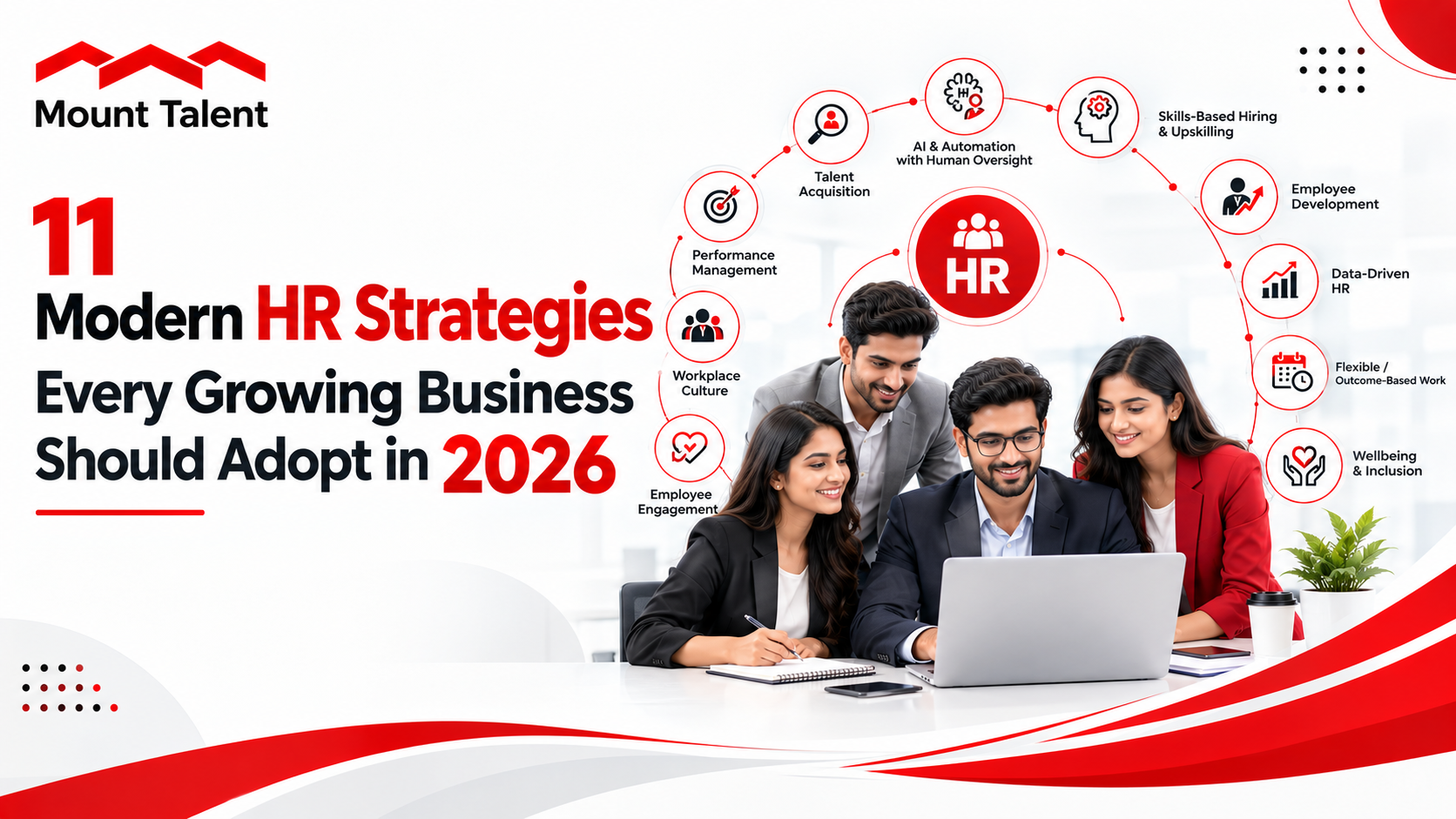
11 Modern HR Strategies Every Growing Business Should Adopt in 2026
11 Modern HR Strategies Every Growing Business Should Adopt in 2026
Growing a business is exciting, but it puts enormous pressure on HR practices that worked fine when the team was small. What served you well with twenty employees often breaks down at a hundred, and the companies that scale successfully are the ones that modernize their HR approach before the cracks become expensive problems.
This guide covers 11 modern HR strategies that growing businesses should adopt in 2026, grouped into practical categories you can act on right away. Whether you’re a founder still wearing the HR hat yourself or leading a small people team, these strategies will help you build a workforce function that scales with your ambitions rather than holding them back.
Rethinking How You Hire
Hiring is often the first area that breaks under growth pressure, so it deserves a fresh, structured approach.
1. Adopt Skills-Based Hiring
Shift away from rigid degree requirements and focus on demonstrated skills through practical assessments, portfolios, and work samples. This widens your talent pool significantly and often improves actual job performance, since skills predict output more reliably than credentials alone.
2. Build a Structured, Data-Backed Recruitment Process
Replace ad-hoc, gut-feeling hiring decisions with structured interviews, standardized scorecards, and tracked metrics like time-to-hire and quality-of-hire. This consistency reduces bias and helps you learn what’s actually working as you scale.
3. Strengthen Your Employer Brand
Invest in genuine employer branding through employee stories, transparent job descriptions, and an honest presence on platforms like LinkedIn and Glassdoor. A strong reputation reduces hiring costs and attracts candidates who actively want to work with you, not just anyone willing to apply.
Modernizing Employee Experience
Attracting good people is only half the job; keeping them engaged is where many growing businesses fall short.
4. Personalize Employee Development Plans
Generic, one-size-fits-all training programs rarely serve a diverse, growing workforce well. Build individualized development plans based on each employee’s role, career goals, and skill gaps, reviewed regularly rather than left as a one-time onboarding exercise.
5. Prioritize Flexible Work Arrangements
Structured hybrid policies, flexible hours where feasible, and clear communication about in-office expectations have become baseline requirements for attracting talent, not optional perks. Businesses that stay rigid on this front often lose candidates to more flexible competitors.
6. Build Real Feedback Loops
Replace the traditional annual review with more frequent, informal check-ins between managers and employees. Regular feedback catches performance or engagement issues early, long before they become resignation letters.
Leveraging HR Technology Effectively
Manual HR processes that worked at a small scale quickly become unsustainable as headcount grows.
7. Invest in the Right HR Technology Stack
An applicant tracking system, a reliable HR information system (HRIS), and basic analytics dashboards free your team from repetitive administrative work and give leadership visibility into workforce trends as the company scales.
8. Use AI Thoughtfully, Not Blindly
AI tools can speed up resume screening, automate scheduling, and support onboarding workflows, but they work best when paired with human oversight. Regularly audit AI-driven decisions to ensure they align with fair and accurate outcomes.
Strengthening Retention and Internal Growth
Replacing employees is expensive and disruptive, making retention strategy one of the highest-leverage HR investments available.
9. Create Internal Mobility Pathways
Before posting external job ads, give existing employees visibility into open roles and a genuine path to apply internally. Internal moves are faster, cheaper, and improve morale by showing employees a real future within the company.
10. Focus on Manager Quality, Not Just Policy
Employees often leave managers, not companies. Invest in manager training that covers communication, feedback delivery, and conflict resolution, since even the best HR policies fail if frontline managers can’t execute them well.
Building for Long-Term Resilience
11. Treat DEI and Wellbeing as Business Strategy, Not Compliance
Move diversity, equity, and inclusion efforts, along with employee wellbeing programs, beyond compliance checkboxes. Set measurable goals, track progress honestly, and genuinely support employee mental health and work-life balance, since these factors increasingly influence both retention and employer reputation.
Common Challenges Growing Businesses Face When Modernizing HR
“We don’t have the budget for expensive HR tools”
Many foundational improvements, like structured interviews, clear feedback cycles, and internal job boards, cost little beyond time and consistency. Prioritize process changes before investing heavily in technology.
“Leadership doesn’t see HR as a priority”
Present HR initiatives with clear business impact data, such as reduced turnover costs or faster time-to-hire, rather than framing them purely as employee-wellbeing initiatives. Numbers tend to get leadership attention faster than good intentions alone.
“Our team is too small to implement all of this at once”
You don’t need to adopt all 11 strategies simultaneously. Start with the two or three that address your most pressing current pain points, whether that’s slow hiring, high turnover, or inconsistent feedback, and build from there as your team grows.
Frequently Asked Questions
What is the most important HR strategy for a growing business? Building a structured, data-backed hiring process is often the most immediately impactful strategy, since poor hiring decisions create downstream problems across retention, culture, and productivity.
How can small businesses modernize HR without a big budget? Small businesses can start with low-cost changes like structured interviews, regular manager check-ins, and internal job boards before investing in HR technology platforms as the team and budget grow.
Why does manager quality matter more than HR policy? Even well-designed HR policies fail if managers can’t communicate clearly, give useful feedback, or resolve conflicts effectively, which is why employees frequently cite their direct manager as the biggest factor in whether they stay or leave.
Conclusion
Modernizing HR doesn’t require overhauling everything at once — it requires choosing the strategies that address your business’s most pressing gaps today, whether that’s hiring, employee experience, technology, or retention, and building consistently from there as you grow. For more HR insights and the latest job opportunities across India, visit Rojgar.com and explore related reads on HR trends,
11 Modern HR Strategies Every Growing Business Should Adopt in 2026 Growing a business is exciting, but it puts enormous…